The one resounding sentiment that you got out of both the New York Comic Con panel and the newly unveiled teaser trailer for Universal's upcoming prequel "The Thing" is that the filmmakers are very respectful of the John Carpenter film that it's based upon. (His film, of course, was based on Howard Hawks' original "The Thing From Another World.") What's funny is reconciling this with what Carpenter has said repeatedly about any filmmaker that wants to remake or embellish on something that he has done, which he has said boils down to him opening up his hand, someone placing a check in his hand, and then him closing his hand.
But anyway, the first thing that the assembled "Thing" crew (director Matthijs van Heijningen, actors Joel Edgerton, Adewale Akinnuoye-Agbaje, Eric Christian Olsen and Ulrich Thomsen, and producers Marc Abraham and Eric Newman) did was show the newly cut ("I was still mixing it yesterday," said director van Heijningen) teaser trailer for the film, which is scheduled for release in 2011.
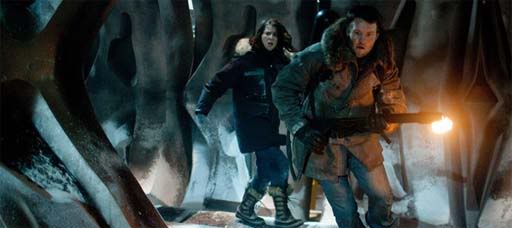
The clip started out with shots of a dreary 1980s-era New York, where two young scientists - Mary Elizabeth Winstead (who wasn't at the panel because she was getting married, thus dashing two dreams of ours in one go) and Eric Christian Olsen, chat in a cafe. Olsen is trying to convince her to come to Antarctica with him, to become part of an expedition. "What I'm offering you is an opportunity to get out in the field and do something BIG," Olsen says. "Do you actually know what it is?" she asks. "No," he answers. From there we get quick clips of the Norwegian camp from the first film, with some great narration by expedition leader Thomsen about how "man's sense of identity, religion, culture, civilization, has forever been altered," which goes along with some eerie Norwegian folk singing and some great shots of a drill burrowing through the alien's "ice coffin," along with scary things happening, people with flame throwers, and oogie-boogie monsters. The footage looked solid but was the perfect "get the people whooping at Comic Con" set of images: clearly referential of the original film that all the geeks know and love, while not actually showing anything of substance (that could be picked apart on the internet - like right here!) It was a scrutiny-free sizzle reel. But that said, the images did look good, and even if it doesn't live up to the Carpenter original, which it almost certainly will not, it could be a fun, gooey sci-fi romp.
This was the first time the teaser had been unveiled to anyone, including members of the cast. "I was really scared, and I know what happens," Olsen quipped when asked for his impression.
"It started for us after we finished "Dawn of the Dead," which we made with Zack Snyder for Universal. We were looking at the Universal library and one of the great titles in that library is "The Thing." I don't know if you can tell from the trailer, but this movie precedes the Carpenter movie, this takes place in the Norwegian camp visited in the Carpenter movie. We made no attempt to remake "The Thing" because it's a brilliant movie and it would be very difficult to try and make a contemporary movie. Universal was very kind to let us set a movie in the Carpenter universe and keep it in that universe, and we're pretty pleased with how it ended up," producer Eric Newman said, as to why he wanted to revisit "The Thing."
"We didn't want to be in the business of painting the mustache on the Mona Lisa," fellow producer Mark Abraham added. "Once we convinced Universal that there was a real reason to do a prequel, we jumped in pretty heavily and decided to try and find the pieces in the Carpenter film that we had to match up with our picture. That became the puzzle, that became the script, we had to reverse-engineer. We actually met Mathijis through Zack Snyder [they're working on a Las Vegas-set zombie movie called "Army of the Dead"]."
On the decision to name it, simply, "The Thing," Newman said: "There were a couple of considerations that went into that. One of the great things about the Carpenter movie, and John was the first person to say this when we talked to him about it, but his was a remake of the Howard Hawks version, and ideally we loved the idea of our movie living in that universe, that world. And I thought about "Exorcist: The Heretic." There are always these colon titles that felt reverential than just calling it "The Thing." It's the same monster. And it's not a sequel. There was never any idea to throw in a subtitle. It would have felt like a videogame or something." "I saw the movie when I was 15, I adored the movie, but as a European I was really interested in these poor bastards in the Norwegian camp. So I've always had a little idea about what happened in that camp. How did he get through the door? Who were these people? Were they Norwegians or was there another nationality? So my fascination came from that Norwegian part. So when I heard they were trying to do a prequel, I knew I wanted to be a part of that," director van Heijningen stated, in his interest in the project.
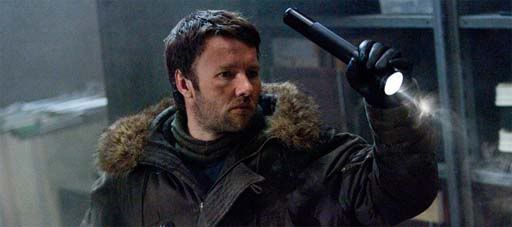
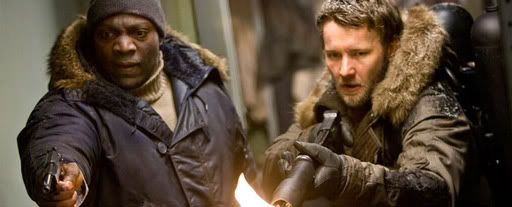
The actors rattled off their various parts, and they're a typically ragtag band — Edgerton and Akinnuoye-Agbaje are helicopter pilots that fly back and forth between the camps (including the American camp) and are eventually tasked with transporting the otherworldly beast; Eric Christian Olsen, as stated before, is a young biologist helping his mentor on the Antarctica expedition; and Ulrich Thomsen is the German head of the expedition. (The Norwegian actors are all overseas, working.)
"When we reconstructed, from all the clues in John Carpenter's movie, and we said that we would tell the story of the Norwegians, obviously the studio wouldn't buy it with an all-Norwegian cast," director van Heijningen said on the ethnic diversity in the cast. He went on to describe Mary Elizabeth Winstead as a "Ripley-type character. She becomes the heroine, not because she wants to but she's the smartest one on the block and if she doesn't do anything, everyone will die." But what about the creature? CGI? Puppets? What? Director Matthijs van Heijningen answers: "One of the things I wanted to do was have the monster be practical. Now that everything is CGI, I really pushed hard for having practical monsters. And it's not only as a tribute to Carpenter. It's my experience that with actors, say you have a Norwegian guy with a flame thrower, and you say "Okay, you're going to see a green tennis ball" - his reaction will be different than if he sees a 7-foot monster. It was important we had as many real monsters as possible."
As for what the monster will look like, the director teased: "You've never seen The Thing in its pure form, but the question is — is that its pure form? It could have come from another planet and taken over that form. But we will see it in its original form, when they get it out of the ice. Then it escapes from the ice and starts attacking these guys." What remains to be seen is just how "pure," "The Thing" prequel will be. Guess we'll have to wait until April 29, 2011 to find that out for ourselves.
At New York Comic Con, remake happy Strike Entertainment producer Eric Newman took time out from promoting "The Thing" to discuss the company's plans for John Carpenter's "They Live." In the original, Roddy Piper plays a homeless wanderer who finds a batch of sunglasses that help him uncover a global conspiracy led by aliens trying to seduce humans into complacency through Reagan-era capitalism. He then shoots them all in the face.
Apparently, the glasses might not be an integral part of the remake. I09 spoke to Newman, who revealed D.B. Weiss ("Game Of Thrones") would be writing the remake, and he shared details about what they are considering for this planned update. When asked about the sunglasses, he said, "We're discussing that. I'd like to say that really, a vagrant wandering around the streets could get you to try on his sunglasses, if he would leave you alone afterwards. He may even pay you $100, 'Hey put these on.' So we're kind of exploring different versions of what is that thing that allows you to see. But I'm not going to tell you what it is. It might be something different than sunglasses." So that's what caused JC's seizure this weekend (Get well, John).
If not glasses, then what? "They Live" is the sort of idea that could probably be adapted for each generation, but one of the more memorable scenes of an unforgettable movie is Piper trying to convince Keith David to "Put on the glasses!" via fistfight, resulting in one of the longest onscreen fistfights in cinematic history. To try to top it is foolish, but to eliminate it entirely? Perish the thought.
Poor John Carpenter. The one-time maestro of malevolence cooks up his first feature-length fright flick in a decade and ends up inadvertently playing second fiddle to Martin Scorsese. It's bad timing and worse luck — don't blame Carpenter for the eerie, unflattering similarities between his latest and the year's other '60s-set insane asylum thriller. Blame him instead for everything willfully derivative about this uneasy cocktail blend of tired ol' genre tropes.
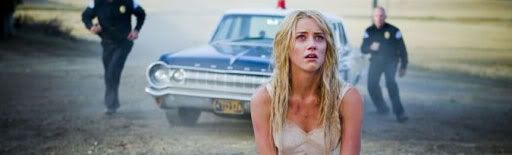
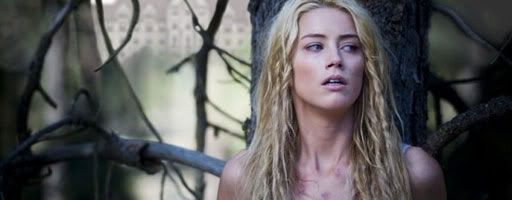
One part supernatural slasher flick, two parts shaggy dog ghost story, "John Carpenter's The Ward" commences with a baptizing fire, the farmhouse blaze set by brainy beauty Kristen (Amber Heard). Her mysterious act of arson gets her thrown into the girls-only loony bin, where she grapples with both primitive practitioners of mental health (led by an amusingly evasive Jared Harris) and a murderous spectral hag. What do her fellow, marked-for-death patients know that they're not letting on? And what connection is there between this rousing round of "Ten Little Indians" and Kristen's own troubled past?
If you can't put the pieces together faster than this amateur Nancy Drew, chances are the baldly-telegraphed big reveal of "Shutter Island" snuck up on you, too. Thing is, that hoary bit of hokum, predicated though it was on an exceedingly predictable twist ending, at least offered a boundless bounty of virtuosic aesthetic wonders. The same can't really be said for 'The Ward,' which is handsomely made but completely bereft of memorable set-pieces. Working again in theatrical widescreen, Carpenter glides through the halls and the corridors of his haunted hospital—a fairly convincing period milieu, achieved on a very restricted budget—with the voyeuristic guile of Michael Myers. If only he had such a dread-inducing boogieman at his disposal; this generic ghoulie evinces scarcely a shudder, and JC reduces her paranormal activities to a series of dully repetitive jump scares. Like Dario Argento, another over-the-hill prince of darkness, he seems to have lost his maliciously magic touch.
Which is a shame, because there's enough potboiler potential in Carpenter's basic set-up—and enough gumption in his game cast of inmates-cum-victims, an all-girl variation on the usual cuckoo's nest of eccentric basket cases—to inspire visions of the enjoyable schlock that could have been. Forget "Shutter Island"; we would would have settled for the passable pleasures of "Halloween 2." [C] A.A. Dowd, courtesy of In Review Online
This December’s “Tron Legacy” has a dubious distinction: it is a sequel that comes a staggering 28 years after the first film, which must be close to a record. And yet, despite the original proving something of a flop on its release, people seem to be clamoring over the sequel. Whether this borrowed nostalgia for the unremembered 80s (to borrow a phrase from James Murphy) converts into a box-office smash remains to be seen, but it's not like Disney is the only one in town trying the trick.
With the poppy, entertaining "Wall Street: Money Never Sleeps," opening today, with original helmer Oliver Stone back in the director's chair 23 years after the original, it seems that it's not just studios who are keen to cash in on the success of earlier hits — some filmmakers just can't resist the temptation to revisit an old subject, and therefore their glory days. From Truffaut's five autobiographical Antoine Doinel films, across twenty years, to Steven Spielberg going back to the adventure well nearly thirty years after "Raiders of the Lost Ark" in "Indiana Jones and the Kingdom of the Crystal Skull," it seems that, after a certain amount of time, few directors can abstain from returning to the scene of past triumphs.
But whether deriving from that reason, or from studios keen to cash in on fuzzy nostalgia for a property, in honor of "Wall Street 2," we've taken a look at some examples of sequels made years after the original, from belated blockbusters to indie in-jokes. If nothing else, it'll help to prepare you for "Birth of a Nation 2" in 2013... It's also interesting to note that, as much as we complain about the lack of originality these days, several of the films below were released in 1990. Presumably, everyone's mortgage was in jeopardy around that time...
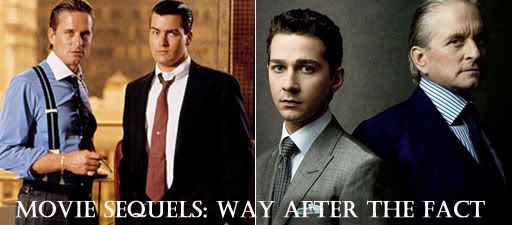
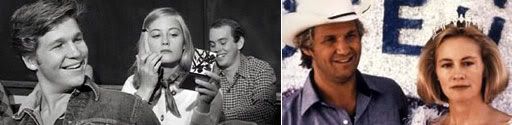
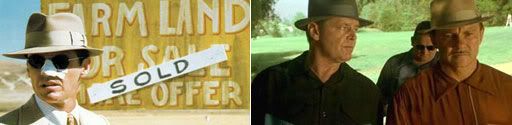
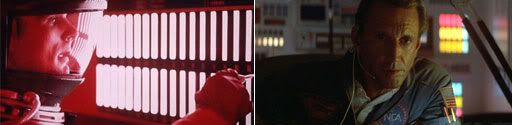
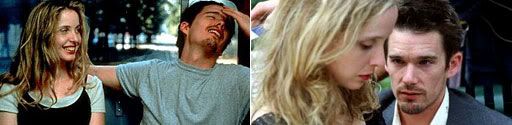
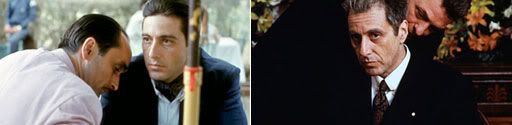
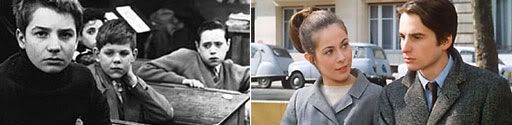
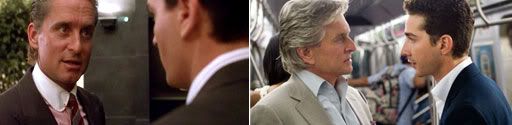
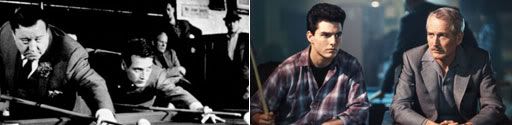
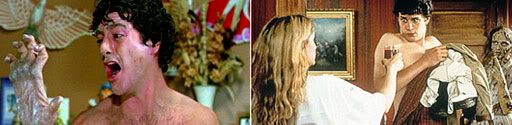
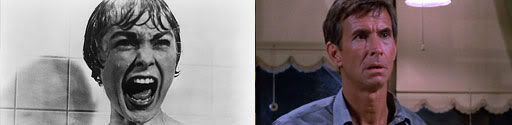
“The Last Picture Show” (1971) /”Texasville” (1990) There is something about Texas — its blissful sky, comprised of subdued tones and massive clouds, reaching across a sheer oasis of sprawl. It's a perfect setting to present the story of suburban life post World War II in America — so many places to go, you might as well just stay put. "The Last Picture Show," Peter Bogdonavich's first major directing effort, is based on Larry McMurtry's novel of the same name, and still stands as a beautiful, pained film that is so much more than just a coming of age story. The slow death of the West Texas town, represented with the closing of the local movie house, serves the perfect metaphor for the soul-crushing ennui that comes along with small town life. When everyone knows your business, its easy to seek escape, but it's also just safer to stand in the place where you are. Bogdonavich's direction is impeccable and there isn't a weak performance in the film, which was smartly cast with non-stars at the time like Cybil Sheppard and Jeff Bridges. The use of black and white to shed light on the sadness found in this Anytown, U.S.A. was a bold move and "Picture Show" really is a must-see for any lover of film. Unfortunately the same can not be said about “Texasville,” a sequel, also based on a McMurty novel, that takes the character development and social commentary of the original and stomps it to death. The actors phone in their performances, and who can blame them with the weak story, stunt casting and complete lack of connection to the original film; it's like Bogdonavich had forgotten what made the original so special. The celebration has now become a passive aggressive mockery of Texas life, meaning the follow-up succeeds at one thing; making you miss the beauty of the original. “Chinatown” (1974) / “The Two Jakes” (1990) The last, and most high profile of Jack Nicholson’s directorial efforts, 1990’s “The Two Jakes” is a confounding, yet entertaining picture, that even at full stretch can’t touch so much as the lower slopes of “Chinatown”’s towering peaks. Not surprising, perhaps, considering the stone-cold classic nature of the original, but what is remarkable is the way “The Two Jakes” fails; returning screenwriter Robert Towne acquits himself well, Harvey Keitel is immensely enjoyable to watch in a twisty role (one that, oddly, producer Robert Evans was originally set to play), and some of the elements - the model home community, for example, are actually pretty inspired thematic choices. But the film veers erratically in tone from campy pastiche to dark noir, often depending on who is onscreen: from Madeleine Stowe, an actress we usually like, wearing her character like a Halloween costume (a femme would not so brutally be miscast as fatale again until Julia Roberts in “Confessions of a Dangerous Mind”) to Meg Tilly, who actually does such an impressive job of referencing Polanski’s film that if you know your “Chinatown” at all, you guess the major twist about an hour and a half before Jake Gittes does. And so to Nicholson himself. It seems double jobbing as actor and director does not suit the man - Gittes here is just as sweaty and desperate as ever,, but somehow he comes off as faintly comical where his former incarnation was troubled and perversely noble. As far as modern noir goes, ”The Two Jakes” may be nowhere near as awful as, say, “The Black Dahlia,” but still it’s a whole world away from the devastating, seedy perfection of the original. Oh, and nobody slits Nicholson’s nose open, which is a major flaw. “2001: A Space Odyssey” (1968) / “2010: The Year We Make Contact” (1984) You know, "2010" is really not that bad. If Peter “definition of a journeyman” Hyams’ film was not inextricably linked to Kubrick’s masterpiece, history would surely have been kinder to it — it’s an entertaining, solid piece of work (if a bit slower than we remembered it) with a comprehensible story (like "2001," based on an Arthur C. Clarke novel) and persuasive performances. If it was called “Europa,” and the monolith was instead, I don’t know, a giant gumball, and the ghostly incarnation of Dave Bowman was called Max or Bert, then, as a stand-alone sci-fi film, it might have even enjoyed some prestige (in a somewhat second-tier “The Abyss” sort of way). But let’s face it, “2001” needed a sequel less then possibly any other film in history, and so "2010," suffers, perhaps unfairly, by comparison. Truly, the long shadow cast by its immaculate predecessor provides the only real distraction from the simple pleasures on display - but watching the film does become an exercise in identifying what is missing - where is the wonder, where is the “my god, its full of stars," the endless play of psychedelic light, the uncanny chill of HAL’s non-human intelligence? None of these things are on offer, what we get instead with "2010" is a perfectly adequate and quite reasonable explanation for something we didn’t want explained in the first place. Also, it’s an aside and applies similarly to "2001," but this film is set this year, right? — so where are our manned missions to Jupiter? I want my jetpack, goddammit. This future blows. “Before Sunrise” (1995) / “Before Sunset” (2004) Sequels have many purposes — mostly financial, it should be said. The best sequels — "Godfather II," "Toy Story 2," "Aliens" — are done because a story legitimately needed to be continued, and there were ways to expand on the characters and the world they inhabit. But it's incredibly rare to find a sequel which is not only superior, but even gives its predecessor an added weight in its existence. But that's exactly what Richard Linklater's "Before Sunset" did to "Before Sunrise," nine years after the fact. The first film sees Ethan Hawke and Julie Delpy as shallow, naive twentysomethings who share a magical night together in Vienna on a whim, and it's a sweet, enjoyable picture, if, like its central characters, a little self-centered at times. But with hindsight, it almost feels like Linklater & co planned it that way: when we see them in their 30s, Jesse and Celine seem somehow broken — they're older, wiser, and infinitely more disappointed. That makes it sounds depressing, but the bruises that life's inflicted on the pair somehow serve only to make it more swooningly romantic (and give it incredible sense of emotional texture). Plus, while Vienna's great and all, Paris is truly a city for lovers, and we dare you to watch "Before Sunset" and not want to hop on a plane and meet the-one-who-got-away there. Part of us wants to see one of these every nine years, but that would harm the sanctity of the ending of "Sunset" — one of the few perfect conclusions, and perhaps the best use of Nina Simone in any film to date. “The Godfather II” (1974) /”The Godfather Part III” (1990) As the first sequel to ever receive an Oscar, "The Godfather II" manages to to tell the story we missed in its predecessor— the in-depth look at a fractured man. “The Godfather” laid the foundation of the tale, an American dream-like story of power, family and crime, all surrounding the Corleones. Francis Ford Coppola’s series, adapted from Mario Puzo's novels, showed the life behind closed doors of a crime family, a familiar tale now, but then a complete 180 from the standard caricature of gangster life. The sequel is darker and richer than the original, and it's focus is on the inevitable breaking of Michael, so passionately and beautiful embodied by Al Pacino, which comes from losing a grip on his identity and the tradition he has been hiding behind. Badly received at the time, "Godfather III" is a film time has been kind to, and looking back on it gives one a better perspective of what it had achieved. While it's impossible to live up to the perfection of the original pair, the story told in the final act is mature and powerful; the aging of a powerful mob boss, looking for salvation in favors, and the possibility of redemption. Coppola is at his best when he is telling rich tall tale versions of the American dream, and this series allows us to feel for and look at every facet of a world we might not have ever been let in to. “Scenes From A Marriage” (1974)/ “Saraband” (2003) In 1974, the late great Swedish cinema craftsman Ingmar Bergman released “Scenes From A Marriage,” a devastating six-part, six hour, made-for-television examination of marital disintegration that was later cut down to three hours for an international theatrical run. Starring Erland Josephson and Bergman regular muse Liv Ullmann (she wasn’t one of his five wives, but they did have a child together), the crushing portrait depicts a seemingly successful and happy marriage that slowly curdles into animus, resentment and then bitter divorce (an attempt at reconciliation is all the more damaging). It’s an emotionally trenchant work, and certainly not for the recently engaged... 2003’s “Saraband” is a curious effort. Widely regarded as an excellent last work by Bergman (he passed in 2007), the made-for-TV work still feels like an unnecessary chapter and bookend to the earlier work. Revisiting his divorcees in a theatrical, chaptered style, the picture isn’t as engaging or penetrating — while there's still more acidic bite, it's just not as watchable — but as a mea culpa projection (and condemnation) of all his failures as a father and husband (the filmmaker sired nine children from his various wives and dalliances), Bergman’s swan song is befitting of the unapologetically cruel and cold male protagonist who eventually drives one of his sons to suicide. “The 400 Blows” (1959) / “Stolen Kisses” (1968) While it may not be the first instance in cinematic history of a long gap between sequels,"Stolen Kisses" is easily the earliest effort of note (and yes, we realize that technically the short “Antonie & Collette” in 1962 is really the first sequel). Nine years passed Truffaut's semi-autobiographical and seminal “The 400 Blows,” about a young, Balzac-inspired scamp whose penchant for trouble is linked with his unabandoned ambition. So when we re-visit Antoine Doinel (played once again by Jean-Pierre Leaud in a role that he would forever be linked with) it’s no surprise to find that in his 20s his passion, ambition and budding ideology continues to hamper his ability to maintain a job or a relationship. We’re gonna say it here (and offend cinephiles in the process): we prefer “Stolen Kisses.” Not that “400 Blows” is a “bad” film, and its certainly a landmark, but if there is one we would chose to watch, we would go to “Stolen Kisses” in a heartbeat. It’s breezy and enjoyable in a way its slightly stodgier predecessor isn’t, but perhaps it's just because it's more relatable -- Truffaut and Leaud effortlessly show a deep understanding of the confusion of those tender years, of early relationships where the push and pull between being selfless and selfish is never bigger, and the worries of locking yourself into a single identity when the world seems to be your oyster. Everyone else can keep Holden Caulfield, because we prefer Antoine Doinel. “Wall Street” (1985) / “Wall Street: Money Never Sleeps” (2010) Oliver Stone is a constant revisionist, usually doing multiple “drafts” of his films on home video (there have been three different cuts of the little-seen “Alexander,” for crying out loud) and what “Wall Street: Money Never Sleeps” really feels like him just taking another pass at his zeitgeist-capturing eighties drama. People who will undoubtedly claim the new one doesn’t hold a candle to the original are missing something essential - the original wasn’t all that great. Sure, it’s a compelling enough drama, but both the script and the direction are ridiculously mundane and straightforward. The new movie (based on a throwaway line of dialogue from the original) features zippier direction and editorial work, as well as an even more of-the-moment critique of the current financial crisis. It’s still sort of a mess but not as sparse as the first film. They aren’t masterpieces by any stretch of the imagination, but are fine entertainments. There’s a reason everyone’s renting it before the new movie, and it’s not because of the amount of time that has passed between entries - it’s the fact that the first one isn’t all that memorable. "The Hustler" (1961)/"The Color Of Money" (1986) Robert Rossen's 1961 pool-hall drama "The Hustler," is one of those rare non-genre-based films that utilized a completely different director for its belated sequel. In the original film a young Paul Newman plays the cocky, drunken, small-time pool shark, "Fast" Eddie Felson who is schooled and destroyed by the legend Minnesota Fats (Jackie Gleason). 25 years later, Martin Scorsese released "The Color Of Money," tracking the exploits of Fast Eddie once more only this time, older, wiser and now in the veteran mentor role. A mirror image of the arrogant young hop, Tom Cruise plays his protegé and rival Vincent Lauria, and the picture also starred Mary Elizabeth Mastrantonio, Helen Shaver and John Turturro. Both films nominally came from Walter Tevis' books (he wrote the latter in 1984), but the sequel decided to use a Richard Price-penned screenplay that had pretty much nothing to do with the novel. Both films are fantastic in their own right (the original received nine Oscar nominations and won two, for Best Art Direction and Cinematography; the latter was nominated for three, with Paul Newman winning Best Actor), but are largely wildly opposite films. One is an engaging black and white humanist drama about the horrible price of winning, the other is a relentlessly moving (Scorsese as ever obsessed with tracking shots) and soulful picture that charts Felson's comeback and long road back to redemption (he's become the reprehensible George C. Scott vampire-like front man character who takes the lion's share of the winnings). But taken back to back the films are an extraordinary commentary on the evolution of life, inevitability, and atonement. “Indiana Jones” (1981-89) /”Kingdom of the Crystal Skull” (2008) For most people now in their twenties and thirties, the Indiana Jones franchise was an indelible part of growing up with the movies: a rousing, pure escapism whose theme music and iconic props are etched fondly on our collective memory of the ‘80s. 2008’s "Kingdom of the Crystal Skull" sought vainly to rekindle that magic, following Ford’s advancing years into an Atomic Age setting replete with the pulp signifiers of that era: Cold War villains, grey aliens, and Shia LaBeouf looking conspicuously dweeby in Brando’s Wild One leathers. Personally, we have no issue with the now-infamous fridge: fair enough, it’s the most ludicrous deux ex machina in the history of the device, but the sequence as a whole – Indy discovering an eerie suburban simulacra in the middle of a desert test range – is unexpected, deeply surreal, and possibly the best scene in the movie. No, the real problem with the Kingdom of the Crystal Skull is that it is unnecessary, patently profit-driven, and just not that good. Ford hasn’t sounded this crabby and bored since the "Blade Runner" voice-over – you can almost see the phone receiver he’s addressing his lines into. The family/romantic dynamics are similarly perfunctory, and the heavy use of CGI results in an occasionally over-lit, cartoony look that just ain’t Indy. Once again, the lure of a big payola prompts Lucas to take a wrecking ball to our most cherished memories... “An American Werewolf in London” (1981) / “An American Werewolf in Paris” (1997) On its release in 1981, "An American Werewolf In London" became an instant cult smash. John Landis’ sharp script, written nearly 10 years earlier but eased into production after the success of Landis’ “Animal House,” plays on American xenophobia and ancient European folklore. The rare horror comedy that was as scary as it was funny, it lived on thanks to robust home video sales and repeated releases in increasingly elaborate special editions. But that wasn’t enough. The Weinsteins snapped up the rights and, instead of simply remaking it (although that is now in the works), they made a sequel, waaaay too late. Released on Christmas Day, 1997, “An American Werewolf in Paris” transplanted the action from England to France, only one of a whole host of very bad creative decisions. Instead of a pair of sheltered but fundamentally good American boys backpacking across Europe, we’re given a trio of American jerks who show their respect for Paris by bungee jumping off the Eiffel Tower. (This is about the level of subtlety we’re dealing with here.) Instead of gorgeous prosthetic and puppet effects by Rick Baker we’re given chintzy computer-generated wolves who look more like pissed off boars than creatures of the night. But the most baffling aspect of the movie may be who is behind it - director Anthony Waller, just a few years earlier, had directed the underrated genre classic “Mute Witness,” and who disappeared swiftly after the critical and commercial mauling this received, rarely being heard from again. "Escape from New York" (1981)/"Escape from L.A." (1996) The original “Escape from New York,” directed by John Carpenter and starring Kurt Russell as iconic bad-ass Snake Plissken, was a sci-fi actioner that also served as satirical commentary on the (at the time) extremely scary nature of ghettoized New York City as it existed amongst the consumerist frenzy of the early Reagan eighties. The sequel, released 15 years later, flipped coasts and seems to have only been motivated by the director and star wanting to hang out together. And while there are some barbed jabs at the West Coast obsessions of the mid-90s (plastic surgery, Disneyland, earthquakes, sporting events), they were less toothy, which went along with the sequel’s aesthetic: earnestness was replaced by genuine camp and startling acts of violence gave way to videogame theatrics. Still, it may lack a lot of the first film’s authenticity, sure, but the first film has also aged terribly, and the sequel’s good humor endears it in ways that everything else detracts. Along those lines, Russell’s performance is more arch, the action sequences are more rubbery, and the supporting players more wink-wink in their broadness (Peter Fonda plays a radioactive surfer). Whereas the first was a legitimate stab at a good movie that ended up being kind of junky, the sequel knew it was junk and reveled in it. “Psycho” (1960)/ “Psycho 2” (1983) Here’s the thing about “Psycho 2:” it’s actually pretty good. It came out in 1983, 22 years after Hitchcock’s groundbreaking original that all but invented the slasher horror genre, and featured Norman Bates (again, Anthony Perkins) being released from prison, much to the chagrin of original survivor Lila Loomis (Vera Miles). Norman gets a job as a short order cook, while enduring suspicious looks and an investigation by a shady private eye (played by an immaculately scuzzy Dennis Franz). The movie is structured like a who-dunnit, much like the original, but most of the surprise and nuance of “Psycho” went out the window, replaced by some cheap scares and overwrought psychology. Still, for a kind of late night cheapie, you can do a lot worse - it’s handsomely directed by Australian director Richard Franklin (and shot by frequent John Carpenter collaborator Dean Cundey) and features a dynamite, if way more knowing central performance by Perkins. In fact, the latter two sequels, “Psycho III,” which is a really sleazy slasher movie directed by Perkins, and “Psycho IV,” an above-average television movie that delves into Norman’s past and was written by original screenwriter Joseph Stefano, are easily recommendable too. "Rocky" (1976)/“Rocky Balboa” (2006) and "First Blood" (1982)/“Rambo” (2008) It was 1988 when Rambo finally took off his combat boots and 1990 when Rocky got rid of the boxing trunks, and at that point Sylvester Stallone could no longer consider himself Hollywood royalty. Resurrecting both of his truly iconic characters was both a matter of fan service for nostalgia’s sake as well as unfinished business on Stallone’s part. In “Rocky Balboa,” writer-director-star Stallone brought the character back to his modest roots, with a vague acknowledgment of the middle films in the series that morphed the franchise from modest kitchen-sink sports melodrama into out-and-out action pictures. 2008’s “Rambo” took the opposite approach, embracing the modern nihilism of global politics and acknowledging that the violence inherent in Rambo’s character wasn’t a heroic trait but in fact an ugly flaw. An ugly flaw that, nonetheless, resulted in an improbable number of bodies exploding.
Of course, there are plenty of films — the "Star Wars" prequels, the recent "Predators," "The Blues Brothers 2000," which have taken a beloved classic and picked up, or filled in the story years later, but there's only so much time in the world, and no one could quite face raking over those coals again. We're sure we've missed some along the way, though, so, as ever, feel free to add your suggestions below. And if the "Wall Street" and "Tron" follow-ups connect at the box office, we're sure studio executives will keep them coming too. - Danielle Johnson, Oli Lyttelton, Jessica Kiang, Drew Taylor, Tristan Eldritch, Gabe Toro, RP and Kevin Jagernauth.
 The one resounding sentiment that you got out of both the New York Comic Con panel and the newly unveiled teaser trailer for Universal's upcoming prequel "The Thing" is that the filmmakers are very respectful of the John Carpenter film that it's based upon. (His film, of course, was based on Howard Hawks' original "The Thing From Another World.") What's funny is reconciling this with what Carpenter has said repeatedly about any filmmaker that wants to remake or embellish on something that he has done, which he has said boils down to him opening up his hand, someone placing a check in his hand, and then him closing his hand.
 From there we get quick clips of the Norwegian camp from the first film, with some great narration by expedition leader Thomsen about how "man's sense of identity, religion, culture, civilization, has forever been altered," which goes along with some eerie Norwegian folk singing and some great shots of a drill burrowing through the alien's "ice coffin," along with scary things happening, people with flame throwers, and oogie-boogie monsters. The footage looked solid but was the perfect "get the people whooping at Comic Con" set of images: clearly referential of the original film that all the geeks know and love, while not actually showing anything of substance (that could be picked apart on the internet - like right here!) It was a scrutiny-free sizzle reel. But that said, the images did look good, and even if it doesn't live up to the Carpenter original, which it almost certainly will not, it could be a fun, gooey sci-fi romp.
 "I saw the movie when I was 15, I adored the movie, but as a European I was really interested in these poor bastards in the Norwegian camp. So I've always had a little idea about what happened in that camp. How did he get through the door? Who were these people? Were they Norwegians or was there another nationality? So my fascination came from that Norwegian part. So when I heard they were trying to do a prequel, I knew I wanted to be a part of that," director van Heijningen stated, in his interest in the project.
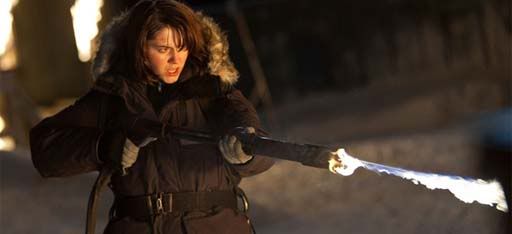 But what about the creature? CGI? Puppets? What? Director Matthijs van Heijningen answers: "One of the things I wanted to do was have the monster be practical. Now that everything is CGI, I really pushed hard for having practical monsters. And it's not only as a tribute to Carpenter. It's my experience that with actors, say you have a Norwegian guy with a flame thrower, and you say "Okay, you're going to see a green tennis ball" - his reaction will be different than if he sees a 7-foot monster. It was important we had as many real monsters as possible."