Home Posts filed under >Wall Street
 This December’s “Tron Legacy” has a dubious distinction: it is a sequel that comes a staggering 28 years after the first film, which must be close to a record. And yet, despite the original proving something of a flop on its release, people seem to be clamoring over the sequel. Whether this borrowed nostalgia for the unremembered 80s (to borrow a phrase from James Murphy) converts into a box-office smash remains to be seen, but it's not like Disney is the only one in town trying the trick.
With the poppy, entertaining "Wall Street: Money Never Sleeps," opening today, with original helmer Oliver Stone back in the director's chair 23 years after the original, it seems that it's not just studios who are keen to cash in on the success of earlier hits — some filmmakers just can't resist the temptation to revisit an old subject, and therefore their glory days. From Truffaut's five autobiographical Antoine Doinel films, across twenty years, to Steven Spielberg going back to the adventure well nearly thirty years after "Raiders of the Lost Ark" in "Indiana Jones and the Kingdom of the Crystal Skull," it seems that, after a certain amount of time, few directors can abstain from returning to the scene of past triumphs.
But whether deriving from that reason, or from studios keen to cash in on fuzzy nostalgia for a property, in honor of "Wall Street 2," we've taken a look at some examples of sequels made years after the original, from belated blockbusters to indie in-jokes. If nothing else, it'll help to prepare you for "Birth of a Nation 2" in 2013... It's also interesting to note that, as much as we complain about the lack of originality these days, several of the films below were released in 1990. Presumably, everyone's mortgage was in jeopardy around that time...
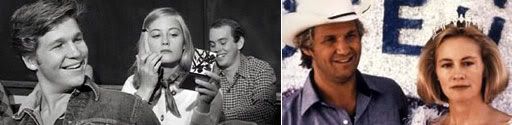
 “The Last Picture Show” (1971) /”Texasville” (1990)
There is something about Texas — its blissful sky, comprised of subdued tones and massive clouds, reaching across a sheer oasis of sprawl. It's a perfect setting to present the story of suburban life post World War II in America — so many places to go, you might as well just stay put. "The Last Picture Show," Peter Bogdonavich's first major directing effort, is based on Larry McMurtry's novel of the same name, and still stands as a beautiful, pained film that is so much more than just a coming of age story. The slow death of the West Texas town, represented with the closing of the local movie house, serves the perfect metaphor for the soul-crushing ennui that comes along with small town life. When everyone knows your business, its easy to seek escape, but it's also just safer to stand in the place where you are. Bogdonavich's direction is impeccable and there isn't a weak performance in the film, which was smartly cast with non-stars at the time like Cybil Sheppard and Jeff Bridges. The use of black and white to shed light on the sadness found in this Anytown, U.S.A. was a bold move and "Picture Show" really is a must-see for any lover of film. Unfortunately the same can not be said about “Texasville,” a sequel, also based on a McMurty novel, that takes the character development and social commentary of the original and stomps it to death. The actors phone in their performances, and who can blame them with the weak story, stunt casting and complete lack of connection to the original film; it's like Bogdonavich had forgotten what made the original so special. The celebration has now become a passive aggressive mockery of Texas life, meaning the follow-up succeeds at one thing; making you miss the beauty of the original.
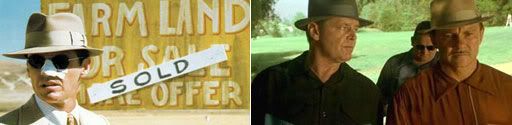
 “Chinatown” (1974) / “The Two Jakes” (1990)
The last, and most high profile of Jack Nicholson’s directorial efforts, 1990’s “The Two Jakes” is a confounding, yet entertaining picture, that even at full stretch can’t touch so much as the lower slopes of “Chinatown”’s towering peaks. Not surprising, perhaps, considering the stone-cold classic nature of the original, but what is remarkable is the way “The Two Jakes” fails; returning screenwriter Robert Towne acquits himself well, Harvey Keitel is immensely enjoyable to watch in a twisty role (one that, oddly, producer Robert Evans was originally set to play), and some of the elements - the model home community, for example, are actually pretty inspired thematic choices. But the film veers erratically in tone from campy pastiche to dark noir, often depending on who is onscreen: from Madeleine Stowe, an actress we usually like, wearing her character like a Halloween costume (a femme would not so brutally be miscast as fatale again until Julia Roberts in “Confessions of a Dangerous Mind”) to Meg Tilly, who actually does such an impressive job of referencing Polanski’s film that if you know your “Chinatown” at all, you guess the major twist about an hour and a half before Jake Gittes does. And so to Nicholson himself. It seems double jobbing as actor and director does not suit the man - Gittes here is just as sweaty and desperate as ever,, but somehow he comes off as faintly comical where his former incarnation was troubled and perversely noble. As far as modern noir goes, ”The Two Jakes” may be nowhere near as awful as, say, “The Black Dahlia,” but still it’s a whole world away from the devastating, seedy perfection of the original. Oh, and nobody slits Nicholson’s nose open, which is a major flaw.
 “2001: A Space Odyssey” (1968) / “2010: The Year We Make Contact” (1984)
You know, "2010" is really not that bad. If Peter “definition of a journeyman” Hyams’ film was not inextricably linked to Kubrick’s masterpiece, history would surely have been kinder to it — it’s an entertaining, solid piece of work (if a bit slower than we remembered it) with a comprehensible story (like "2001," based on an Arthur C. Clarke novel) and persuasive performances. If it was called “Europa,” and the monolith was instead, I don’t know, a giant gumball, and the ghostly incarnation of Dave Bowman was called Max or Bert, then, as a stand-alone sci-fi film, it might have even enjoyed some prestige (in a somewhat second-tier “The Abyss” sort of way). But let’s face it, “2001” needed a sequel less then possibly any other film in history, and so "2010," suffers, perhaps unfairly, by comparison. Truly, the long shadow cast by its immaculate predecessor provides the only real distraction from the simple pleasures on display - but watching the film does become an exercise in identifying what is missing - where is the wonder, where is the “my god, its full of stars," the endless play of psychedelic light, the uncanny chill of HAL’s non-human intelligence? None of these things are on offer, what we get instead with "2010" is a perfectly adequate and quite reasonable explanation for something we didn’t want explained in the first place. Also, it’s an aside and applies similarly to "2001," but this film is set this year, right? — so where are our manned missions to Jupiter? I want my jetpack, goddammit. This future blows.
 “Before Sunrise” (1995) / “Before Sunset” (2004)
Sequels have many purposes — mostly financial, it should be said. The best sequels — "Godfather II," "Toy Story 2," "Aliens" — are done because a story legitimately needed to be continued, and there were ways to expand on the characters and the world they inhabit. But it's incredibly rare to find a sequel which is not only superior, but even gives its predecessor an added weight in its existence. But that's exactly what Richard Linklater's "Before Sunset" did to "Before Sunrise," nine years after the fact. The first film sees Ethan Hawke and Julie Delpy as shallow, naive twentysomethings who share a magical night together in Vienna on a whim, and it's a sweet, enjoyable picture, if, like its central characters, a little self-centered at times. But with hindsight, it almost feels like Linklater & co planned it that way: when we see them in their 30s, Jesse and Celine seem somehow broken — they're older, wiser, and infinitely more disappointed. That makes it sounds depressing, but the bruises that life's inflicted on the pair somehow serve only to make it more swooningly romantic (and give it incredible sense of emotional texture). Plus, while Vienna's great and all, Paris is truly a city for lovers, and we dare you to watch "Before Sunset" and not want to hop on a plane and meet the-one-who-got-away there. Part of us wants to see one of these every nine years, but that would harm the sanctity of the ending of "Sunset" — one of the few perfect conclusions, and perhaps the best use of Nina Simone in any film to date.
 “The Godfather II” (1974) /”The Godfather Part III” (1990)
As the first sequel to ever receive an Oscar, "The Godfather II" manages to to tell the story we missed in its predecessor— the in-depth look at a fractured man. “The Godfather” laid the foundation of the tale, an American dream-like story of power, family and crime, all surrounding the Corleones. Francis Ford Coppola’s series, adapted from Mario Puzo's novels, showed the life behind closed doors of a crime family, a familiar tale now, but then a complete 180 from the standard caricature of gangster life. The sequel is darker and richer than the original, and it's focus is on the inevitable breaking of Michael, so passionately and beautiful embodied by Al Pacino, which comes from losing a grip on his identity and the tradition he has been hiding behind. Badly received at the time, "Godfather III" is a film time has been kind to, and looking back on it gives one a better perspective of what it had achieved. While it's impossible to live up to the perfection of the original pair, the story told in the final act is mature and powerful; the aging of a powerful mob boss, looking for salvation in favors, and the possibility of redemption. Coppola is at his best when he is telling rich tall tale versions of the American dream, and this series allows us to feel for and look at every facet of a world we might not have ever been let in to.
 “Scenes From A Marriage” (1974)/ “Saraband” (2003)
In 1974, the late great Swedish cinema craftsman Ingmar Bergman released “Scenes From A Marriage,” a devastating six-part, six hour, made-for-television examination of marital disintegration that was later cut down to three hours for an international theatrical run. Starring Erland Josephson and Bergman regular muse Liv Ullmann (she wasn’t one of his five wives, but they did have a child together), the crushing portrait depicts a seemingly successful and happy marriage that slowly curdles into animus, resentment and then bitter divorce (an attempt at reconciliation is all the more damaging). It’s an emotionally trenchant work, and certainly not for the recently engaged... 2003’s “Saraband” is a curious effort. Widely regarded as an excellent last work by Bergman (he passed in 2007), the made-for-TV work still feels like an unnecessary chapter and bookend to the earlier work. Revisiting his divorcees in a theatrical, chaptered style, the picture isn’t as engaging or penetrating — while there's still more acidic bite, it's just not as watchable — but as a mea culpa projection (and condemnation) of all his failures as a father and husband (the filmmaker sired nine children from his various wives and dalliances), Bergman’s swan song is befitting of the unapologetically cruel and cold male protagonist who eventually drives one of his sons to suicide.
 “The 400 Blows” (1959) / “Stolen Kisses” (1968)
While it may not be the first instance in cinematic history of a long gap between sequels,"Stolen Kisses" is easily the earliest effort of note (and yes, we realize that technically the short “Antonie & Collette” in 1962 is really the first sequel). Nine years passed Truffaut's semi-autobiographical and seminal “The 400 Blows,” about a young, Balzac-inspired scamp whose penchant for trouble is linked with his unabandoned ambition. So when we re-visit Antoine Doinel (played once again by Jean-Pierre Leaud in a role that he would forever be linked with) it’s no surprise to find that in his 20s his passion, ambition and budding ideology continues to hamper his ability to maintain a job or a relationship. We’re gonna say it here (and offend cinephiles in the process): we prefer “Stolen Kisses.” Not that “400 Blows” is a “bad” film, and its certainly a landmark, but if there is one we would chose to watch, we would go to “Stolen Kisses” in a heartbeat. It’s breezy and enjoyable in a way its slightly stodgier predecessor isn’t, but perhaps it's just because it's more relatable -- Truffaut and Leaud effortlessly show a deep understanding of the confusion of those tender years, of early relationships where the push and pull between being selfless and selfish is never bigger, and the worries of locking yourself into a single identity when the world seems to be your oyster. Everyone else can keep Holden Caulfield, because we prefer Antoine Doinel.
 “Wall Street” (1985) / “Wall Street: Money Never Sleeps” (2010)
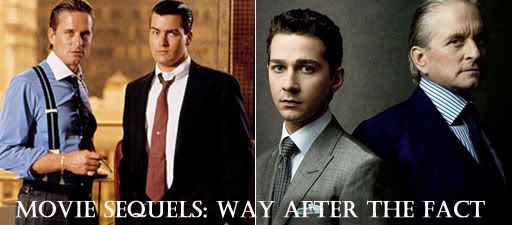
Oliver Stone is a constant revisionist, usually doing multiple “drafts” of his films on home video (there have been three different cuts of the little-seen “Alexander,” for crying out loud) and what “Wall Street: Money Never Sleeps” really feels like him just taking another pass at his zeitgeist-capturing eighties drama. People who will undoubtedly claim the new one doesn’t hold a candle to the original are missing something essential - the original wasn’t all that great. Sure, it’s a compelling enough drama, but both the script and the direction are ridiculously mundane and straightforward. The new movie (based on a throwaway line of dialogue from the original) features zippier direction and editorial work, as well as an even more of-the-moment critique of the current financial crisis. It’s still sort of a mess but not as sparse as the first film. They aren’t masterpieces by any stretch of the imagination, but are fine entertainments. There’s a reason everyone’s renting it before the new movie, and it’s not because of the amount of time that has passed between entries - it’s the fact that the first one isn’t all that memorable.
 "The Hustler" (1961)/"The Color Of Money" (1986)
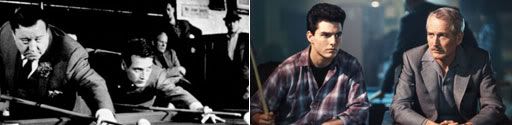
Robert Rossen's 1961 pool-hall drama "The Hustler," is one of those rare non-genre-based films that utilized a completely different director for its belated sequel. In the original film a young Paul Newman plays the cocky, drunken, small-time pool shark, "Fast" Eddie Felson who is schooled and destroyed by the legend Minnesota Fats (Jackie Gleason). 25 years later, Martin Scorsese released "The Color Of Money," tracking the exploits of Fast Eddie once more only this time, older, wiser and now in the veteran mentor role. A mirror image of the arrogant young hop, Tom Cruise plays his protegé and rival Vincent Lauria, and the picture also starred Mary Elizabeth Mastrantonio, Helen Shaver and John Turturro. Both films nominally came from Walter Tevis' books (he wrote the latter in 1984), but the sequel decided to use a Richard Price-penned screenplay that had pretty much nothing to do with the novel. Both films are fantastic in their own right (the original received nine Oscar nominations and won two, for Best Art Direction and Cinematography; the latter was nominated for three, with Paul Newman winning Best Actor), but are largely wildly opposite films. One is an engaging black and white humanist drama about the horrible price of winning, the other is a relentlessly moving (Scorsese as ever obsessed with tracking shots) and soulful picture that charts Felson's comeback and long road back to redemption (he's become the reprehensible George C. Scott vampire-like front man character who takes the lion's share of the winnings). But taken back to back the films are an extraordinary commentary on the evolution of life, inevitability, and atonement.
 “Indiana Jones” (1981-89) /”Kingdom of the Crystal Skull” (2008)
For most people now in their twenties and thirties, the Indiana Jones franchise was an indelible part of growing up with the movies: a rousing, pure escapism whose theme music and iconic props are etched fondly on our collective memory of the ‘80s. 2008’s "Kingdom of the Crystal Skull" sought vainly to rekindle that magic, following Ford’s advancing years into an Atomic Age setting replete with the pulp signifiers of that era: Cold War villains, grey aliens, and Shia LaBeouf looking conspicuously dweeby in Brando’s Wild One leathers. Personally, we have no issue with the now-infamous fridge: fair enough, it’s the most ludicrous deux ex machina in the history of the device, but the sequence as a whole – Indy discovering an eerie suburban simulacra in the middle of a desert test range – is unexpected, deeply surreal, and possibly the best scene in the movie. No, the real problem with the Kingdom of the Crystal Skull is that it is unnecessary, patently profit-driven, and just not that good. Ford hasn’t sounded this crabby and bored since the "Blade Runner" voice-over – you can almost see the phone receiver he’s addressing his lines into. The family/romantic dynamics are similarly perfunctory, and the heavy use of CGI results in an occasionally over-lit, cartoony look that just ain’t Indy. Once again, the lure of a big payola prompts Lucas to take a wrecking ball to our most cherished memories...
 “An American Werewolf in London” (1981) / “An American Werewolf in Paris” (1997)
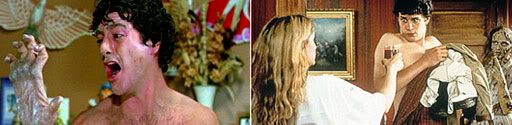
On its release in 1981, "An American Werewolf In London" became an instant cult smash. John Landis’ sharp script, written nearly 10 years earlier but eased into production after the success of Landis’ “Animal House,” plays on American xenophobia and ancient European folklore. The rare horror comedy that was as scary as it was funny, it lived on thanks to robust home video sales and repeated releases in increasingly elaborate special editions. But that wasn’t enough. The Weinsteins snapped up the rights and, instead of simply remaking it (although that is now in the works), they made a sequel, waaaay too late. Released on Christmas Day, 1997, “An American Werewolf in Paris” transplanted the action from England to France, only one of a whole host of very bad creative decisions. Instead of a pair of sheltered but fundamentally good American boys backpacking across Europe, we’re given a trio of American jerks who show their respect for Paris by bungee jumping off the Eiffel Tower. (This is about the level of subtlety we’re dealing with here.) Instead of gorgeous prosthetic and puppet effects by Rick Baker we’re given chintzy computer-generated wolves who look more like pissed off boars than creatures of the night. But the most baffling aspect of the movie may be who is behind it - director Anthony Waller, just a few years earlier, had directed the underrated genre classic “Mute Witness,” and who disappeared swiftly after the critical and commercial mauling this received, rarely being heard from again.
 "Escape from New York" (1981)/"Escape from L.A." (1996)
The original “Escape from New York,” directed by John Carpenter and starring Kurt Russell as iconic bad-ass Snake Plissken, was a sci-fi actioner that also served as satirical commentary on the (at the time) extremely scary nature of ghettoized New York City as it existed amongst the consumerist frenzy of the early Reagan eighties. The sequel, released 15 years later, flipped coasts and seems to have only been motivated by the director and star wanting to hang out together. And while there are some barbed jabs at the West Coast obsessions of the mid-90s (plastic surgery, Disneyland, earthquakes, sporting events), they were less toothy, which went along with the sequel’s aesthetic: earnestness was replaced by genuine camp and startling acts of violence gave way to videogame theatrics. Still, it may lack a lot of the first film’s authenticity, sure, but the first film has also aged terribly, and the sequel’s good humor endears it in ways that everything else detracts. Along those lines, Russell’s performance is more arch, the action sequences are more rubbery, and the supporting players more wink-wink in their broadness (Peter Fonda plays a radioactive surfer). Whereas the first was a legitimate stab at a good movie that ended up being kind of junky, the sequel knew it was junk and reveled in it.
 “Psycho” (1960)/ “Psycho 2” (1983)
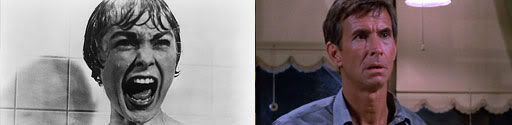
Here’s the thing about “Psycho 2:” it’s actually pretty good. It came out in 1983, 22 years after Hitchcock’s groundbreaking original that all but invented the slasher horror genre, and featured Norman Bates (again, Anthony Perkins) being released from prison, much to the chagrin of original survivor Lila Loomis (Vera Miles). Norman gets a job as a short order cook, while enduring suspicious looks and an investigation by a shady private eye (played by an immaculately scuzzy Dennis Franz). The movie is structured like a who-dunnit, much like the original, but most of the surprise and nuance of “Psycho” went out the window, replaced by some cheap scares and overwrought psychology. Still, for a kind of late night cheapie, you can do a lot worse - it’s handsomely directed by Australian director Richard Franklin (and shot by frequent John Carpenter collaborator Dean Cundey) and features a dynamite, if way more knowing central performance by Perkins. In fact, the latter two sequels, “Psycho III,” which is a really sleazy slasher movie directed by Perkins, and “Psycho IV,” an above-average television movie that delves into Norman’s past and was written by original screenwriter Joseph Stefano, are easily recommendable too.
 "Rocky" (1976)/“Rocky Balboa” (2006) and "First Blood" (1982)/“Rambo” (2008)
It was 1988 when Rambo finally took off his combat boots and 1990 when Rocky got rid of the boxing trunks, and at that point Sylvester Stallone could no longer consider himself Hollywood royalty. Resurrecting both of his truly iconic characters was both a matter of fan service for nostalgia’s sake as well as unfinished business on Stallone’s part. In “Rocky Balboa,” writer-director-star Stallone brought the character back to his modest roots, with a vague acknowledgment of the middle films in the series that morphed the franchise from modest kitchen-sink sports melodrama into out-and-out action pictures. 2008’s “Rambo” took the opposite approach, embracing the modern nihilism of global politics and acknowledging that the violence inherent in Rambo’s character wasn’t a heroic trait but in fact an ugly flaw. An ugly flaw that, nonetheless, resulted in an improbable number of bodies exploding.
Of course, there are plenty of films — the "Star Wars" prequels, the recent "Predators," "The Blues Brothers 2000," which have taken a beloved classic and picked up, or filled in the story years later, but there's only so much time in the world, and no one could quite face raking over those coals again. We're sure we've missed some along the way, though, so, as ever, feel free to add your suggestions below. And if the "Wall Street" and "Tron" follow-ups connect at the box office, we're sure studio executives will keep them coming too. - Danielle Johnson, Oli Lyttelton, Jessica Kiang, Drew Taylor, Tristan Eldritch, Gabe Toro, RP and Kevin Jagernauth.

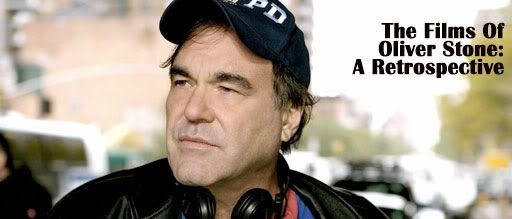
Oliver Stone loves his country, but he is also its loudest critic. Whether tackling history head on in films like "Platoon" or "Born On The Fourth Of July," or profiling presidents in "JFK," "W." and "Nixon," and even in seemingly genre-centered material like "Natural Born Killers" or "Any Given Sunday," Stone views America in his own unique, if sometimes contradictory ways. His track record is certainly marked by tremendous highs, definitely lows and curious middles (mostly marked by genre excursions like "U-Turn," "Any Given Sunday" and "The Doors") but he is never one to sit still. If there's any evidence of Stone's constantly changing priorities only has to look at his last four films — "World Trade Center," "W.," "South Of The Border," "Wall Street: Money Never Sleeps" — to truly get a sense of a director driven both by passion and finance, and by a love for his country that is also pained by its failings.
As much to his detriment as it is to his advantage, Stone remains one of the most unique and vocal voices among working American filmmakers. While is output might be uneven, his films are hardly ever boring. Often experimenting with different lenses, film stock, techniques, camera angles, Stone is continually find new ways to shape and tell his stories. With that in mind and with "Wall Street: Money Never Sleeps" hitting theaters this weekend, we take a look back at Stone's films determining which ones worked, those that didn't and highlighting the ones we wouldn't mind seeing again.
 "Natural Born Killers" (1994)
Oliver Stone's 1994 serial-killer film was the filmmaker at his most kaleidoscopically strange; a savage, of-the-moment take-down of the media and its fascination with true life killers (contextualizing it amidst OJ, the Menendez Brothers, and those serial killer trading cards doesn’t make the movie any less bonkers), it should have been a revelatory experience, especially when you factor in its A-list cast (including Robert Downey Jr., who for some reason has an Australian accent) and its bold visual experimentation. But what it turned out to be was Oliver Stone, so hyped up on the movie (and the moment’s) over-sized much-ness, that he forgot to, you know, tell a story. The movie was very loosely based on a script by Quentin Tarantino, and starred Woody Harrelson and Juliette Lewis as a pair of star-crossed spree killers, and that’s pretty much all you’ll get out of the plot. Instead, we’re forced to endure painful, sitcom-y flashbacks with Rodney Dangerfield as Lewis’ pedophile father and such lush visual embellishments as rear projections in which a Pegasus flies by their vintage American convertible. What any of this means, exactly, seems beside the point: this was Stone going for a mood more than a movie, the fever-dream of the current American climate, which, in the end, lacks any real punch. The best thing that came out of the movie was the fascinating nonfiction book “Killer Instinct” by producer Jane Hamsher. [C-]
 "Nixon" (1995)
Stone’s truly underrated masterpiece. What could have been a more sanctimonious take-down of the infamous president, Stone, with a crack team of collaborators (many of them from “JFK” - composer John Williams, cinematographer Robert Richardson) created a richly dense and layered portrait of a weak-willed man with more than a few co-conspirators that were just as ruthless and cutthroat as he was, if not more so. Since the movie lost money and only received a smattering of critical acclaim, most will remember Anthony Hopkins’ hypnotic performance as Nixon: sweaty, concerned, able to erupt into furious rages, and always listening to his wife Pat (Joan Allen), who comes off as more than a little Lady Macbeth. What’s interesting to note is that, on such a huge film, Stone really pushed the envelope, in terms of experimental editorial work; in what other major studio biopic would you see a scene, in which a floral bigwig meets with Nixon, while time lapse footage of a flower blossoming is super-imposed over the image? “Nixon” combined the trippy go-for-broke-ness of “Natural Born Killers” with one of the most uniformly excellent all-star casts ever assembled and, mercifully, a dogged determination to actually tell the story; the story of Nixon. [A-]
 "U Turn" (1997)
Standing out like a sore thumb in the director's filmography, Stone set the politics aside and had a little fun with the desert noir "U Turn." Billed, very deliberately, as "An Oliver Stone Movie" rather than as a "'film," it's a lunatic, gonzo piece of pulp, with the same spirit as "Natural Born Killers," but freed of the desire to be meaningful. Sean Penn is as close to an everyman as he's ever played, and gives a solid performance, but he's overshadowed by supporting players who seem to be in some kind of competition to out batshit-crazy each other. Every person that Penn meets in Superior, Arizona is more nuts than the last, from Jennifer Lopez's femme fatale (which surely got her the role in Soderbergh's "Out of Sight"), to Joaquin Phoenix's combustible Toby N. Tucker. It's a crude, unrestrained piece of work, but as time goes on it's become a rather enjoyable one — not a film that'll stick in the mind, by any means, but a blast while it lasts. Let's face it, any film involving a hideously-made-up Billy Bob Thornton playing solo Twister has to be worth tracking down, right? [B-] "W." (2008)
The most striking thing about “W.” is what it isn’t. After wildly embellished movies like “Nixon” and “Natural Born Killers” (even “Any Given Sunday” is pretty weird), “W.,” the third film in his unofficial “president trilogy,” feels positively square. Straightforwardly told and edited, the story of one of history’s most reviled presidents, the war-startin’, election-stealin’, torture-endorsin’, grammar-ignorin’ George W. Bush (Josh Brolin) plays more like a mundane human drama than the toothsome take-down you might have expected. Part of this has to do with the almost limitless amount of humanity Brolin brings to the role, part of it is the sensation that the movie was really, really rushed (because it was). It’s the first movie in Stone’s oeuvre that seems to be crying out for another, definitive director’s cut, one with all the flourishes you’d expect, but alas, it isn’t meant to be. Instead, we’re stuck with this half-formed film, which isn’t without its pleasures (like seeing Richard Dreyfuss mumble his way through a Dick Cheney impression), but there’s not a whole lot to hang onto at the end of the day. It’s a minor effort, for sure, not as totally limp as “World Trade Center” but far from the firing-on-all-cylinders glory of “JFK” or “Nixon.” [B-]

"
Salvador" (1986)
Given Oliver Stone's perpetual (and justified) indignation with American imperialism in the last century, and his general predilection for politically controversial subjects, it should have come as no surprise in the '8os when it was announced that the filmmaker would be making a film about the problems in Central American and more specifically, the violent civil war in El Salvador that raged from1980 through 1992, complete with the meddling of the U.S. government and military. Seen through the eyes of a downtrodden, irresponsible and unreliable American journalist and photographer (James Woods), the film tracks the hack as he travels to San Salvador with his equally dubious friend (Jim Belushi) in hopes of reviving his career and glory days by capturing footage of the war. Entangled with both leftist guerrillas and the right wing military, the journo soon finds the romanticism of Robert Capa-like war photography is gone and all that's left are the ugly horrors of war. The picture also co-stars Michael Murphy, John Savage, Elpidia Carrillo, Tony Plana, Cynthia Gibb and Juan Fernandez, and while not as overt as say, "JFK," it's not exactly subtle either. While Stone does try and paint the picture of both sides (sort of), it's clear his sympathies lie with the lefty revolutionaries struggling to overthrow their corrupt and death-squad happy government. That really wouldn't be so bad if the dialogue wasn't a thinly-veiled attempt to deliver a ham-fisted and diatribe-y monologue about U.S. hegemony or creating a second Vietnam (while all valid concerns, it's far too obvious and stilted). Still, while dated, "Salvador" was considered a strong piece of work at the time, is still a respectable piece of work and moreover is still entertaining enough to sit all the way through without feeling too restless. [B]
 “Any Given Sunday” (1999)
Having never really understood the concept of understated or subtle, Oliver Stone’s work has always been over-the-top, but there’s a delineating line between his thematic overkill and his stylistic one. “JFK” marked the perfect confluence of multi-media formats climaxing to a sight and sound extravaganza, but then after that picture (“Natural Born Killers”), Stone went into a kind of schizophrenic overkill that only someone like Tony Scott could appreciate (and continues to do so). Stone then calmed down, slightly, a few years later when he got around to 1999’s football drama, “Any Given Sunday,” but the picture is still hilariously amplified and exaggerated with gusto. Just look at the synopsis for crying out loud. It’s a football movie called, a “look at the life and death struggles of modern day gladiators and those who lead them.” At his hammiest, loudest, and most over-the-top worst/best, Al Pacino plays the frustrated coach trying to bring his broken team back from the dead (cue: sports drama cliche) and somehow tame his arrogant, narcissistic and mercurial young quarterback (Jamie Foxx), who just won’t play by the rules — literally, he just does what he wants and changes plays mid-field. Co-starring Cameron Diaz (the team’s owner), Dennis Quaid (a fading quarterback losing his edge), James Woods, L.L. Cool J (all-around hilarious), Matthew Modine, Charlton Heston, Ann-Margret, Lauren Holly and more, “Any Given Sunday” is so melodramatically over-the-top, the film becomes like an unintentional parody of a sports film, but therein lies a lot of ironic value, and while excessive and over-sensationalized at every turn, it’s still pretty entertaining, even if that’s in an laughing-at-you, amused way. [C]
 "Platoon" (1986)
The past is another country; they do things differently there - like give Oscars to Oliver Stone, and cast Charlie Sheen as a bookish innocent - which makes rewatching “Platoon” in 2010 an unintentionally poignant experience. It’s not a bad film, indeed in terms of craft and performances it is one of Stone’s best, but prevailing attitudes towards war have undergone such a philosophical revolution in the intervening years as to make its message, if not irrelevant, then anachronistic. Controversial at the time for its suggestion that at least some of the bad guys in Vietnam could be found in the ranks of U.S. soldiers, today it feels trite — did we really need to have the Vietnam war reduced to the fight for the soul of one privileged white boy before we could understand its horror? That Stone transposes the good vs evil axis away from the U.S. vs The Enemy and onto the internal struggle of mentality and ethos between martyr Elias (Willem Dafoe) and his pot-smoking followers, and the treacherous Barnes (Tom Berenger) with his cadre of murderers and rapists, may seem like progress of sorts, but in so doing he ascribes every virtue of nobility to the former, and every cruelty to the latter, so all he has really done is switch one bogeyman for another. These simplistic dichotomies do the film no favors in our muddier moral times; to us now, the idea that the U.S. might be involved in a protracted foreign war for less-than-pure motives and for which the true cost is measured in human lives, and yes, souls, is not a revelation, it’s a daily debate. For better or worse, the world and its wars have moved on, and for all "Platoon" is a well-made, intermittently affecting film, it has been left behind like a buried artifact, its interest now mostly archaeological. [B] "Wall Street" (1987)
At this point, what can really be said about "Wall Street" that hasn’t already been said? The Gordon Gekko character is an American icon (for better or worse...), numerous pop-culture catchphrases have emerged and endured from the ridiculously quotable script, Michael Douglas spent the rest of his post-Wall Street career doing riffs on the same character (something he’s very good at), and Charlie Sheen became a legitimate box office presence. Because Wall Street is so much a product of its time (in many of the same ways that a film like "Top Gun" was a product of its time), it’s tough to look back and criticize it for being one thing or not. It was a reflection of where we were at a particular point in time, and a foreshadowing of what was to come in the future (the upcoming "Wall Street: Money Never Sleeps" feels similarly timely). Stone and Stanley Weiser’s propulsive screenplay moves like a locomotive bound for the next stop with a sense of never-ceasing urgency. Sheen, as the naive newbie with his post-Platoon baby-face still intact, was a great match for Douglas’s icy villain; their Central Park show-down, as photographed by the incomparable Robert Richardson, reaches near epic/mythic proportions as the two of them trade verbal blows before Gekko pops his top. It’s father vs son, mentor vs student, man vs man. And that’s what Stone has always excelled at — showcasing men of strong wills going up against one another until someone hits the floor. "Wall Street" shares a lot in common with De Palma’s "Scarface" (also scripted by Stone), and much like Scarface, has taken on a new life over the last decade as something that Stone and his collaborators probably never thought it would. It’s one of Stone’s most influential films, and a defining work in his canon. [A] "Heaven & Earth" (1993)
17 years ago, Oliver Stone completed his Vietnam trilogy with "Heaven and Earth" (the other two films being "Platoon" and "Born on the Fourth of July"), a searingly melodramatic look at the Vietnam war through the eyes of an innocent Vietnamese woman. Stone, not known for showcasing strong, central female characters in his movies, went for something different in "Heaven and Earth"; it’s a work that feels distinctly feminine while still retaining the Stone edginess that he’s become famous for. Overall, it may be the weakest of his three Vietnam films, but it’s not without its merits. Unfairly dismissed by most critics upon its initial release (Roger Ebert was one of its few notable champions) and ignored by audiences (the film grossed less than $10 million domestic on a $35 million budget), Heaven and Earth tells the true story of Le Ly (the excellent Hiep Thi Li), a Vietnamese woman whose life was destroyed by the Vietnam war. Separated from her family after numerous village raids and assaults, she meets a seemingly nice and caring U.S. soldier played by Tommy Lee Jones, in one of his customarily intense performances. Her marries her and takes her home only to be confronted by repressed battlefield demons, which help destroy his life with Ly. As mentioned earlier, Stone has never been a “woman’s director,” which may be why "Heaven and Earth" lacks the focus that his other works have. Far from a bad film, it’s simply uneven, but as always, it’s ambitious and great in many sequences and respects. Robert Richardson’s stunning cinematography joined forces with Victor Kempster’s outstanding production design to create an epic-feeling film while Stone’s script went for the intimate more than his work usually does. It’s a solid effort that seems to have been lost in the shuffle. [B-]
 "Talk Radio" (1988)
Oliver Stone found a compatriot in Eric Bogosian, whose play and performance supplies much of the grunt work in this tightly wound drama. Essentially a one-man show, Bogosian is aces as Barry Champlain, a shock jock whose passion for spitting vitriol at anyone unfortunate enough to cross his airwaves is matched only by his own self-aggrandized caustic personality. Stone follows Champlain through a sweltering, nerve-wracking day, whirring his camera around the sound booth like a madman but maintaining a firm grip on Bogosian’s exacting performance (despite a over-reliance on sarcasm that typically goes hand in hand with the nervy Jewish film stereotype), while Leslie Hope, Alec Baldwin and Stone regular John C. McGinley all do solid work behind the scenes. "Talk Radio" must have been a passion project for Stone, and it shows — this is personal work, for both author and filmmaker, but Stone renders it just conventional enough to stay on rails, speeding to a surprising and saddening conclusion. Like Barry Champlain, Oliver Stone likes to go all out, but his direction here thankfully shows noticeable restraint. [B+]
 "Born on the Fourth of July" (1989)
We cannot pretend to know Oliver Stone the man, but if his films are any indication, Vietnam is a festering wound constantly aching at the soul of the director. With "Born on the Fourth of July," Stone finds an outlet altogether different from the ideological jungle hell of "Platoon" or the straight-laced drama of "Heaven & Earth." The story of Ron Kovic, based on his memoir (an honest and heart-breaking read, seek it out), stars Tom Cruise in one of his rare performances that people will talk about for as long as the couch-jumping movie giant is among the living, and then some. As Kovic, a paralyzed Vietnam veteran struggling to come to terms with a life-changing condition and a country that labels him a hero almost out of desperation, Cruise goes for the (pardon the pun) gold, delving heart and soul into Kovic. Spending most of the film in a wheelchair, Cruise is believable and relateable as a young man unwilling to rehabilitate and assume the role everyone wants him to play. Stone’s exploration of idealogy stills pops in the picturesque Norman Rockwell small town life that sends Kovic off to war and welcomes him with open arms while looking on him as half a man. Kovic’s attempts to come to turns with his sacrifice and a costly mistake he made on the front are engrossing, and the supporting cast is as good as they come, with Willem Dafoe making his mark as another wheelchair-bound veteran who whisks Kovic away to a temporary paradise. Stone’s stylistic choices are right on the money here, whether he’s using color temperature to separate flashbacks from the main story or a brief display of slow motion to capture the incident that permanently upends Kovic’s existence. "Born on the Fourth of July" is an out-pouring of emotion, and a well-earned one at that. [A-]
 "The Doors" (1991)
Oliver Stone's semi-factual look at the life and times of Jim Morrison and his acid-rock band, The Doors, infuses the standard tripped-out and conspiracy-laden Stone rhetoric. Who was Jim Morrison and why did he fall apart, seem to be the basic questions posed by Stone, but in the end the viewer is left wondering why they cared in the first place? With mere glimpses of twisted half-baked memories from Jim's early years, it's hard to understand the evolution of this man, whom Stone seems hellbent on approving of and having us fall in love with. Sex, drugs and rock n’ roll were key notes of the 1960s, but what Stone left out of this film is any of the soul or art that usually coincided with them. It's shot and edited like a TV movie, or worse, a film school project, and there are too many throwaway characters to give the film any real biographical merit. On the positive side, Val Kilmer is sensational as Jim, psychotically engulfing himself in his role, and he made it difficult for many to think of Jim Morrison without conjuring up his portrayal. What could have been an interesting and in-depth look at a tortured musician battling America's prudish and naive idealism, became two hours of whining rock star shaky footage. Stone adores deconstructing and critiquing social norms, and has had great success with it previously, but this picture completely missed the mark. The rise and fall of one of the most noted bands of the 1960s is not captured in "The Doors" and Stone missed many opportunities to make this more than just a drug addled, sad sack story of indulgence and narcissism. It's watchable, if only for the soundtrack, an underutilized Kyle MacLachlan and Kilmer. [C-]

"
JFK" (1991)
Probably Stone's most intricate picture, and possibly even his best, "JFK" takes up the cause of controversial Louisiana district attorney Jim Garrison, who prosecuted local businessman Clay Shaw for involvement in a conspiracy to assassinate President John F. Kennedy. Historically speaking, the evidence is thin, but as a piece of propaganda, Stone's film is second to none; by the time you walk out, you're convinced that Kennedy was the victim of a terrible conspiracy, and the director expertly lines up the inconsistencies of the official story (if there's anything more powerful and persuasive in political cinema than the "back and to the left" scene, we've yet to see it). While your head knows that it's less than convincing, your heart goes with Stone, and that's a testament to the quality of filmmaking on display. The helmer makes a talky, three-hour-plus story fly by with bravura direction; the fill-in-the-blanks sequence with Donald Sutherland alone is a masterclass of editing. But it would be a mistake to undervalue the performances he draws from his cast: Kevin Costner has rarely been better, or more likable, while the mammoth supporting cast, from a near-unrecognizable Jack Lemmon to a scenery-chewing Tommy Lee Jones, is uniformly excellent. [A]
"
Alexander" (2004)
Boy, where to begin with this one. Possibly the most ambitious film Stone has ever attempted to make, "Alexander" is a pronounced and overwrought failure on a number of base levels that render it watchable largely for its camp factor only. It’s a shame too, since there is much skill on display behind the camera — the battle scenes are grandiose and gorgeously lensed, for the most part eschewing tight choreography instead relying on impressive mounted bouts of confusion that feel just a tad more authentic. Where Stone’s film sinks is unfortunately, the cast — the director has from time to time let actors play fast and loose, but never to the degree that most thespians indulge in here. Then again, their characters are barely sketched out and mounted with absurdly over-exaggerated habits — from Angelina Jolie’s snake-handling potentially incestuous Olympias to Val Kilmer’s groggy over-eater Philip and Jared Leto’s painfully misguided eye-shadow addict Hephaistion. Colin Farrell as the titular military genius demands a sentence of his own — you can see him straining, trying to draw us in, but the larger-than-life Alexander is too much for the actor — then struggling with alcohol and drug addiction — and it slips away early in the film. When "Alexander" isn’t engaging in bloody warfare (Stone literally uses a red filter during a major sequence late in the film), it's front-loaded with giggle-inducing lover’s talk between Alexander and Hephaistion that almost always falls flat. A rare full-on misfire for the divisive director and a good opportunity for this writer to tell you to see Farrell in "In Bruges," where he’s fantastic. [D+]
 "World Trade Center" (2006)
Considering his reputation as a provocateur and political firebrand, many were dreading Stone's take on the still-recent events of 9/11. But, following hot on the heels of Paul Greengrass' masterpiece "United 93," the biggest surprise was how conventional a melodrama Stone's film proved to be. He clearly needed to play nice after the tanking of "Alexander," but no one was expecting anything close to the Lifetime movie-of-the-week that "World Trade Center" turned out to be. It's not without its moments: Stone stages the attack itself strongly, albeit in a way reminiscent of 1970s disaster movies, and few directors are as adept at handling male bonding, which makes up much of the second half of the film. But, particularly when put up against Greengrass' picture, it can't help but come across as a somewhat cynical, dishonest piece of work, taking a tragic day and mining a happy ending from it. The political subtexts are a little disturbing (Michael Shannon's character, who later served in Iraq, declaring that "they're going to need some good men out there, to avenge this"), the filmmaking unsubtle — witness the soft focus flashbacks from Nicolas Cage's character, or the religious motifs — and Stone's total inability to depict women has rarely been so demonstrable as in the short shrift given to Maria Bello and Maggie Gyllenhaal as the stricken spouses. We're sure that Stone's heart was in the right place, but it comes across as "The Green Berets" of the 9/11 era, rather than "Born On The Fourth Of July." [D]
-- Mark Zhuravsky, Drew Taylor, Nick Clement, Oliver Lyttelton, Jessica Kiang, Danielle Johnsen, Kevin Jagernauth, RP
 This December’s “Tron Legacy” has a dubious distinction: it is a sequel that comes a staggering 28 years after the first film, which must be close to a record. And yet, despite the original proving something of a flop on its release, people seem to be clamoring over the sequel. Whether this borrowed nostalgia for the unremembered 80s (to borrow a phrase from James Murphy) converts into a box-office smash remains to be seen, but it's not like Disney is the only one in town trying the trick.
 “The Last Picture Show” (1971) /”Texasville” (1990)
 “Chinatown” (1974) / “The Two Jakes” (1990)
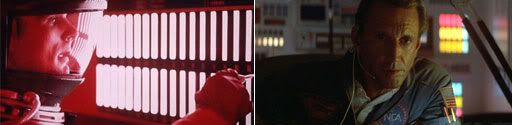 “2001: A Space Odyssey” (1968) / “2010: The Year We Make Contact” (1984)
 “Before Sunrise” (1995) / “Before Sunset” (2004)
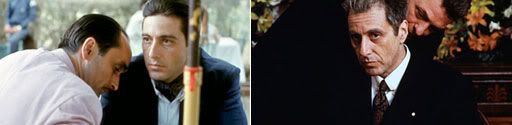 “The Godfather II” (1974) /”The Godfather Part III” (1990)
 “Scenes From A Marriage” (1974)/ “Saraband” (2003)
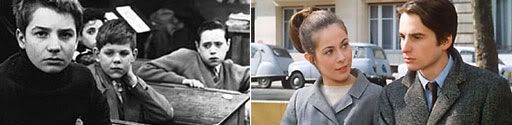 “The 400 Blows” (1959) / “Stolen Kisses” (1968)
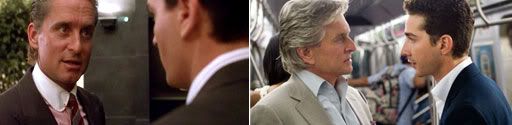 “Wall Street” (1985) / “Wall Street: Money Never Sleeps” (2010)
 "The Hustler" (1961)/"The Color Of Money" (1986)
 “Indiana Jones” (1981-89) /”Kingdom of the Crystal Skull” (2008)
 “An American Werewolf in London” (1981) / “An American Werewolf in Paris” (1997)
 "Escape from New York" (1981)/"Escape from L.A." (1996)
 “Psycho” (1960)/ “Psycho 2” (1983)
 "Rocky" (1976)/“Rocky Balboa” (2006) and "First Blood" (1982)/“Rambo” (2008)